


Torchlight 2 Preview
We don't like to use the "D" word around these parts.
With Diablo III exploding onto the world and making headlines for everything from its high sales numbers to its controversial internet connection requirements, it seems as if Blizzard’s new monster is set to dominate the gaming landscape for some time to come. If you’ve read my review you know that I’m rather fond of that game. Perhaps you’re still not impressed. Perhaps you yearn for a game less streamlined that plays more like the Diablo of yore. That’s the exact sentiment that Runic Games is banking on with Torchlight II--a love letter to Diablo II in a post-Diablo III world. But let’s just not talk about Diablo for now, shall we?
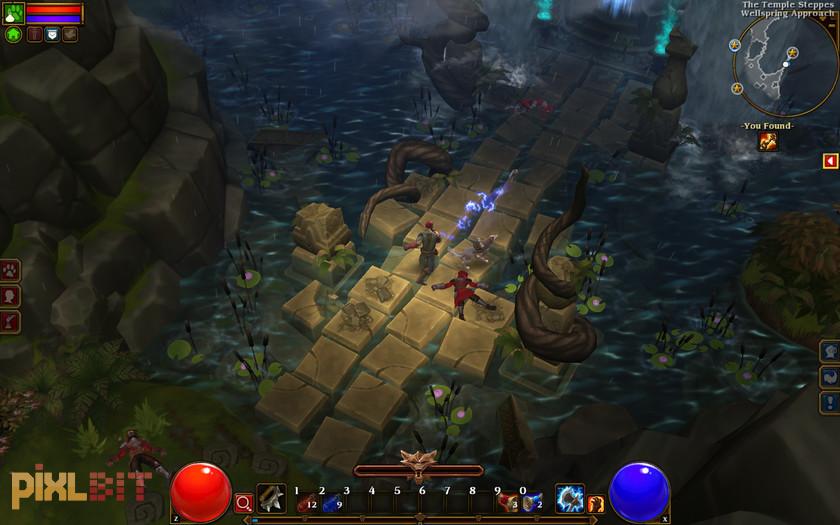
The word of the day for Torchlight II is more. More characters, more pets, and most importantly, more loot. The first Torchlight was a surprise hit, but it could be criticized for being a little light on content and features. Not so this time around; Torchlight II sets out to expand on its predecessor in every way possible, and it draws inspiration from an interesting place.
Take for example the newly opened-up world. No longer confined to the single titular town from the first game, Torchlight II sees players exploring a vast world, replete with towns, dungeons and various nooks and crannies to wander into. While the levels are still randomly generated, it gives this game the look and feel of an MMO—to be more specific, it looks and feels a lot like World of Warcraft.
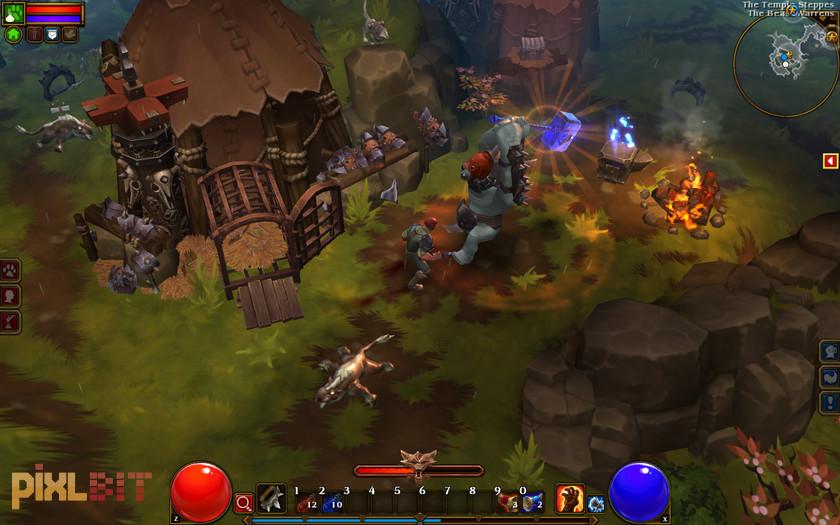
The MMO cues don’t just come from the ginormous map either; many core elements of the game have a decidedly classic “WoWyness “ to them. You can have a quest log filled with various active and secondary tasks, helpfully tracked for you in the upper right side of the screen. Mousing over a dungeon or item that is key to one of your quests brings up a tooltip that reminds you that, hey, this is important! This adds a level of usability and accessibility to Torchlight II that will easily make WoW players feel right at home.
Of course, the main inspiration for the Torchlight series would be Diab…er, that other game. While the third iteration of that-game-which-won’t-be-mentioned made a point of streamlining many gameplay elements to reach a larger audience, Torchlight II keeps things old school, albeit with some modern advances. Your pet returns, but now there are far more to choose from, and they are much more than pack mules this time around. Pets can learn spells to use in battle, and can change form when fed certain items. You can still send them back to town to sell off your loot, letting you keep up with the monster slaying, but now they can do some shopping for you. That’s right; send your pet to town with a shopping list and it will come back with items in tow. Taking a town portal to buy potions is so 2010.
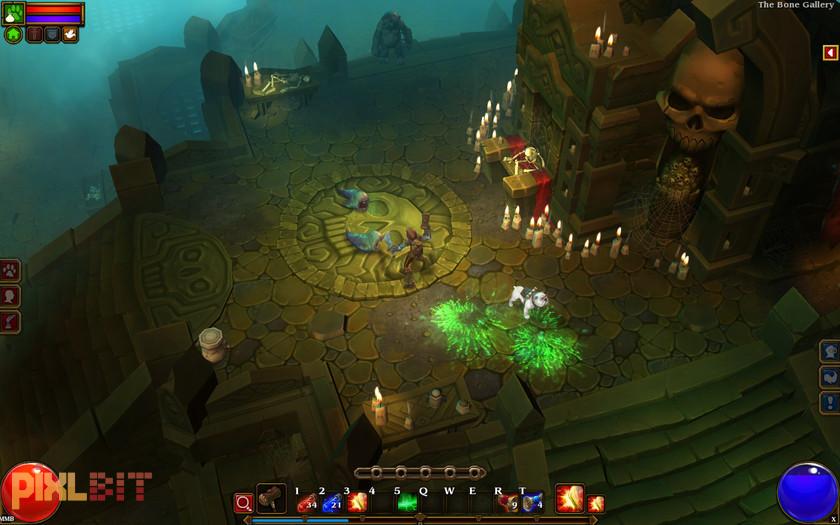
Torchlight II sports four all-new classes from the first game, and they seem geared towards multiplayer party play, again taking a cue from MMOs. You have your Engineer (tanking and support class), Embermage (magic damage dealer), Outlander (ranged attacker), and Berzerker (melee damage dealer). Each class of course has a lengthy skill tree across three disciplines, allowing players to tailor their character to their personal gaming style. In addition to these normal abilities, each class has a type of “super meter” that charges as they kill enemies. As long as there’s enough charge on the meter, players can unleash a special ability that can really turn the tide of battle. The Berzerker for example goes into a frenzy mode that makes every hit a critical one, sure to make quick work of even the most resilient foe.
Even though Torchlight was a critical success almost across the board, there was one glaring element missing from its design: co-op multiplayer. Games like this simply scream to be shared with friends, and the lack of multiplayer really kept Torchlight from reaching that same level of addiction as Diaahhchoo! Not so with Torchlight II though; multiplayer is here and in a big way. Yes, you have drop-in, drop-out co-op for up to four players. Yes, you can play online with no need for a subscription or the need to purchase items with real money. But here’s something you probably haven’t heard in awhile: Torchlight II has LAN support. That’s right, folks: LAN. With the proliferation of laptops and people gaming on the go, LAN seems like a no-brainer. How much more fun is it to link up a couple laptops (or desktops, we won’t judge) and slay in the same room, passing the pizza around? The team at Runic has heard the call for multiplayer and has responded with a resounding “Yes!”
Torchlight II indeed bears a striking resemblance to other loot-based action RPGs, and the 500 pound demon in the room says hi. But Torchlight II also offers a level of depth and customizability that the big guy simply doesn’t offer, and that may be just the thing that allows this game to thrive. If you’re not one of the 6 million people suffering from a sudden case of carpal tunnel, Torchlight II may be just the thing. And if you are one of those 6 million people, maybe ice up your wrist and strap in for something a little different.




Comments